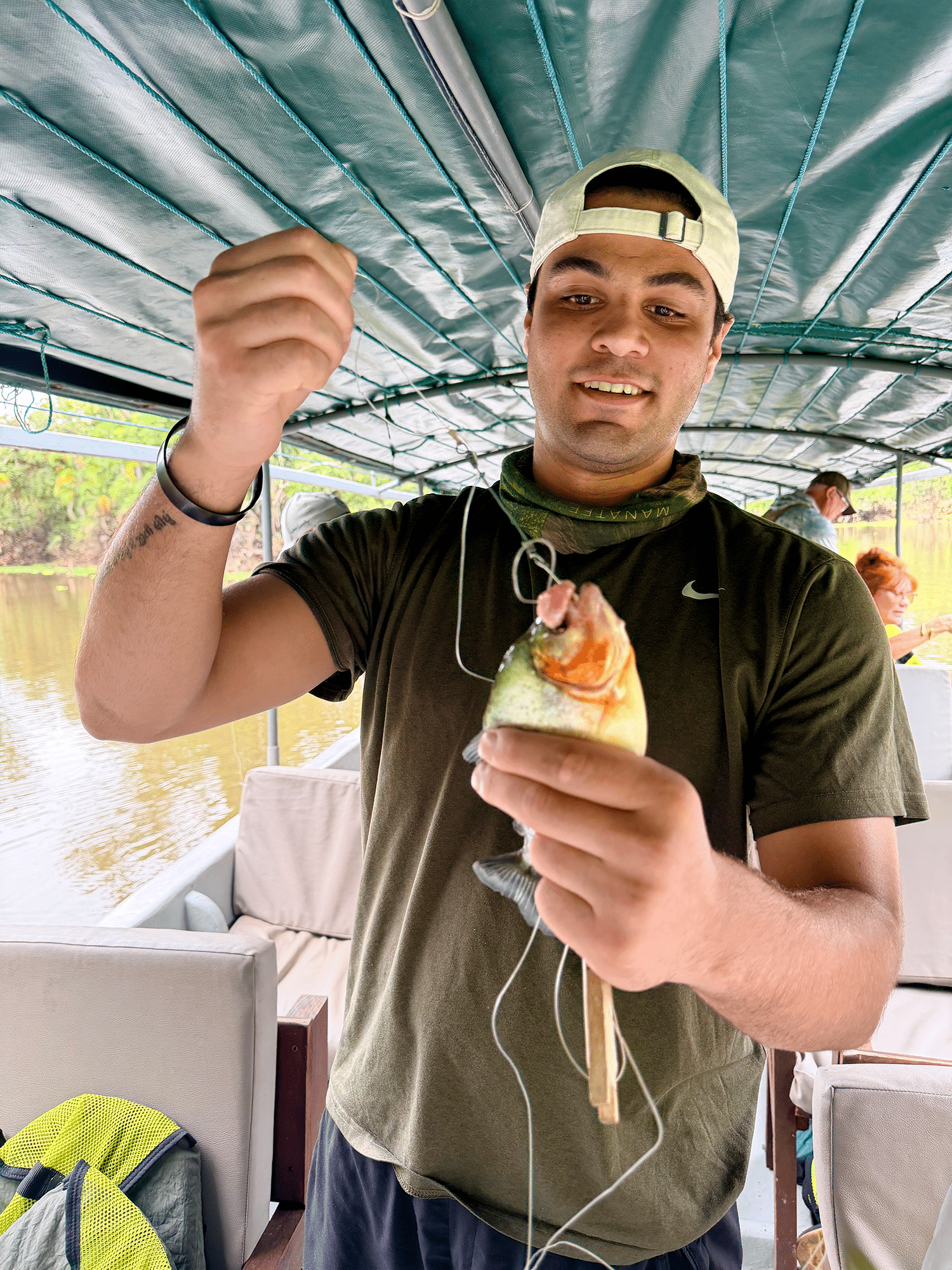
We aren’t a fishing family. We simply lack the temperament for it. Yet, there we were, deep in the Amazon, hooked on the thrill of the hunt. My son let out a roar of triumph—wide-eyed and buzzing with adrenaline—as he hauled a red-bellied piranha from the blackwater into our canoe.
Under the expert eye of our guide, Victor, my son carefully peeled back the fish’s lip to reveal those legendary, razor-edged teeth. It turns out, we didn’t need patience; we just needed the right bait—raw beef.
After surviving the four-year gauntlet of college—a whirlwind of all-nighters and digital noise—my son was more than ready for a deep exhale. We were in the Ecuadorian Amazon to celebrate his graduation, a milestone that felt like it deserved more than just a party.
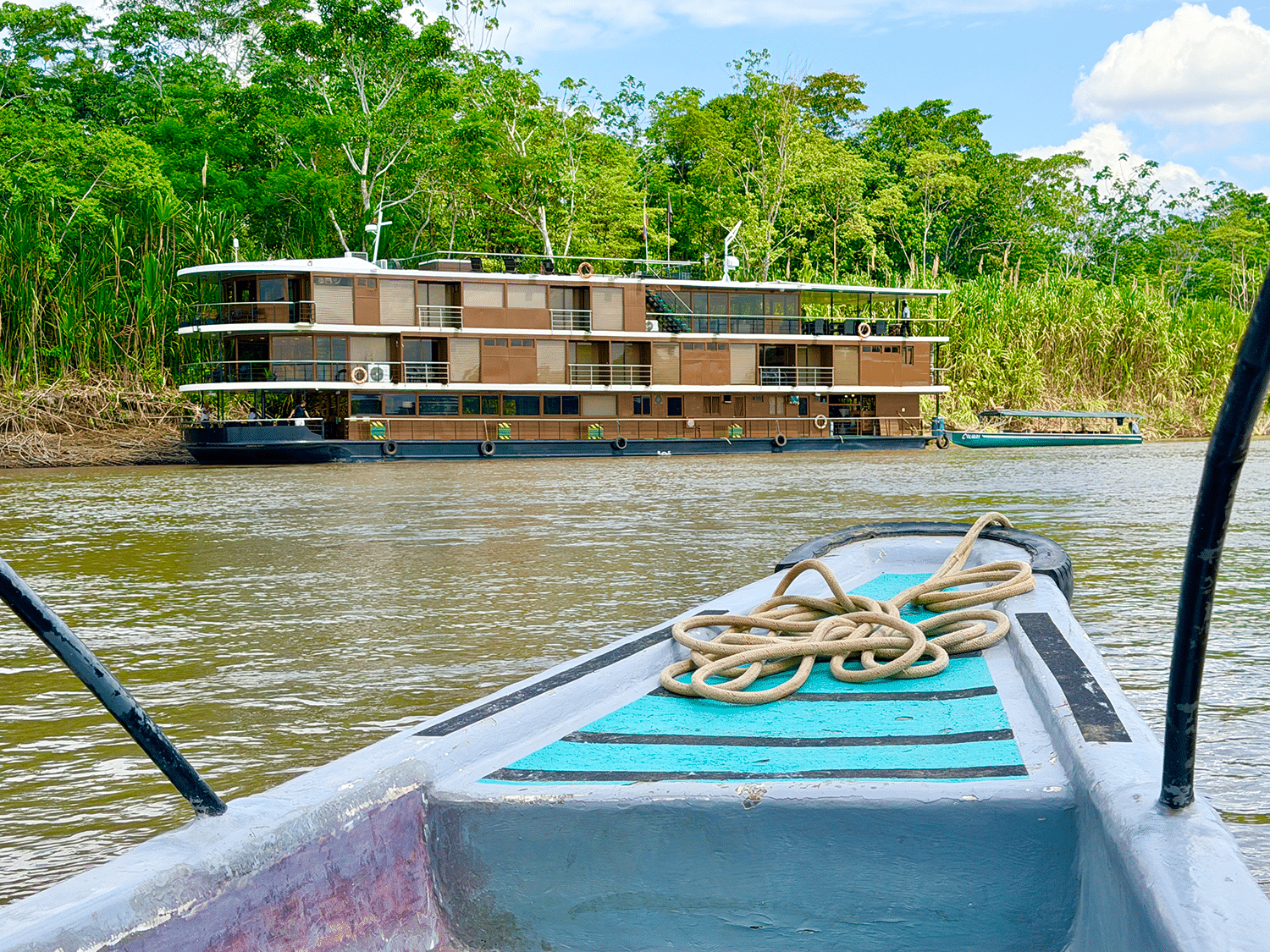
Aboard the M/V Manatee Amazon Explorer, operated by Anakonda Amazon Cruises, we found a seven-night off-the-grid escape where a day of unrivaled wildlife exploration was followed by the comforts of a hot shower and a chilled craft cocktail.
Boutique Basecamp on the Napo
Stepping aboard the Manatee felt less like boarding a vessel and more like entering a floating sanctuary. After a two-hour wind-whipped motorized canoe ride from Coca, we were met with the immediate relief of chilled towels and fresh-squeezed juice—the first of many boutique touches that would define the journey.
The ship’s layout was intentionally intimate. With just 14 cabins (singles, doubles and triples with the option for interconnected rooms), the design prioritized the view above all else.
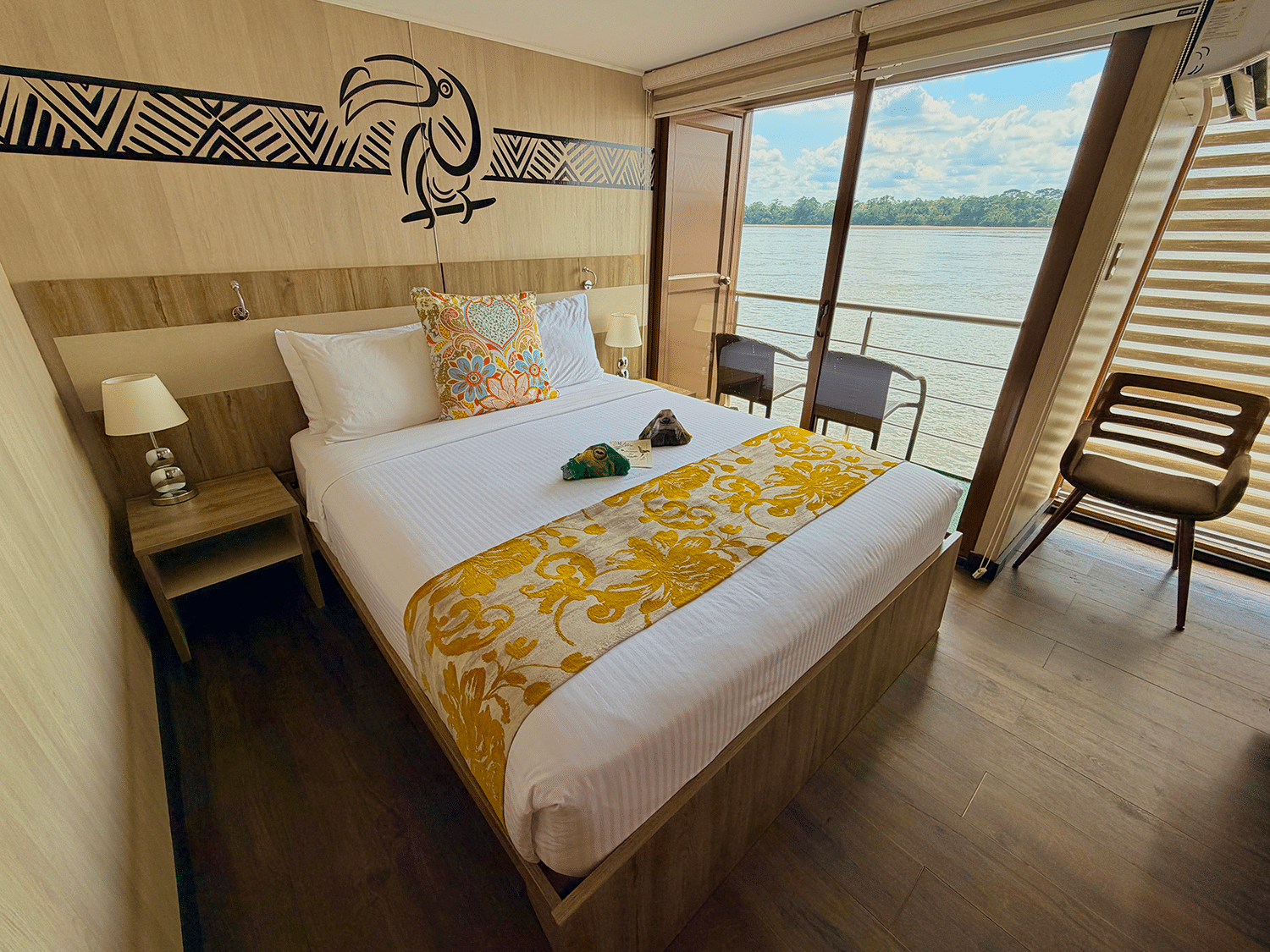
In our suite, floor-to-ceiling windows transformed the passing jungle into a shifting gallery of emerald and shadow—a beautiful tangle of fan palms and ancient ferns that held the riverbanks in a chaotic, chlorophyll-soaked embrace.
We spent our downtime between the comfortable lounge—home to a well-stocked bar and our bartender Vicente—and the sprawling observation deck. There, the hot tub offered the ultimate vantage point for soaking in Amazonian sunsets.
Service on the Manatee was defined by an intuitive precision. In an environment where the humidity dictated a three-shower-a-day schedule, the constant rotation of fresh linens was a necessity.
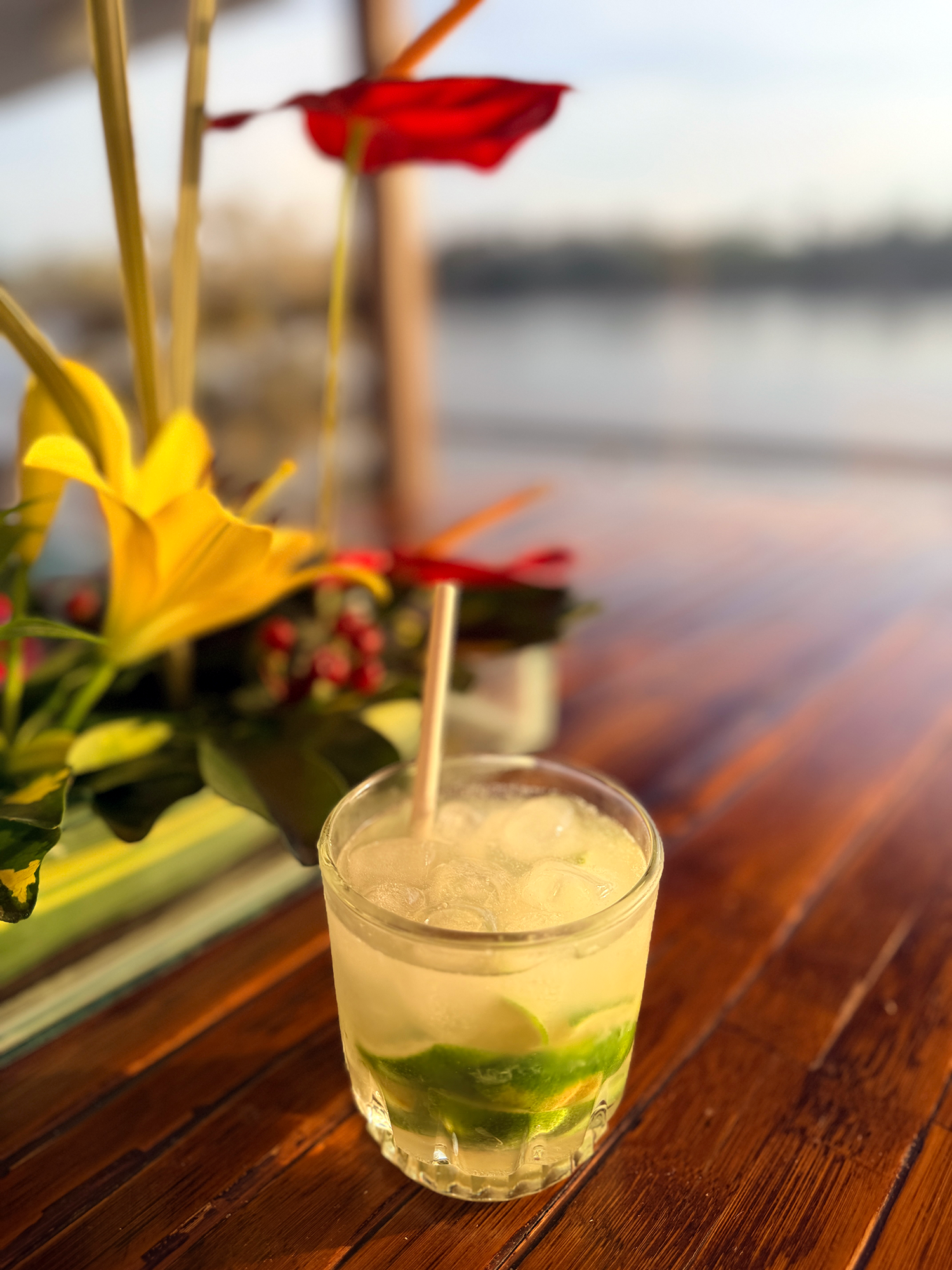
That same attention to detail translated to the dining room and bar: my coffee order was memorized by the first morning, and by sunset, Vicente was mixing caipirinhas using limes sourced from a local farm we’d visited earlier that day.
This level of execution extended to the more rugged side of the operation. The canoe drivers navigated the Napo’s shifting sandbars with a technical mastery that remained unfazed even in the pitch-black of a night excursion.
Meanwhile, the naturalist guides—highly trained and certified under Ecuador’s strict regulations—served as a vital link between the guest and the jungle, peeling back the foliage to reveal a world that would otherwise have remained hidden.
Revealing the Unseen
Our journey centered on Yasuní National Park, one of the most biodiverse spots on the planet. While much of the Amazon dried up during the Ice Age, Yasuní remained a lush, wet “lifeboat” for thousands of species.
This resilience is fueled by its geography: sitting at the intersection of the Andean foothills and the river basin, it’s a convergence point where the climates and creatures of two distinct worlds mingle.
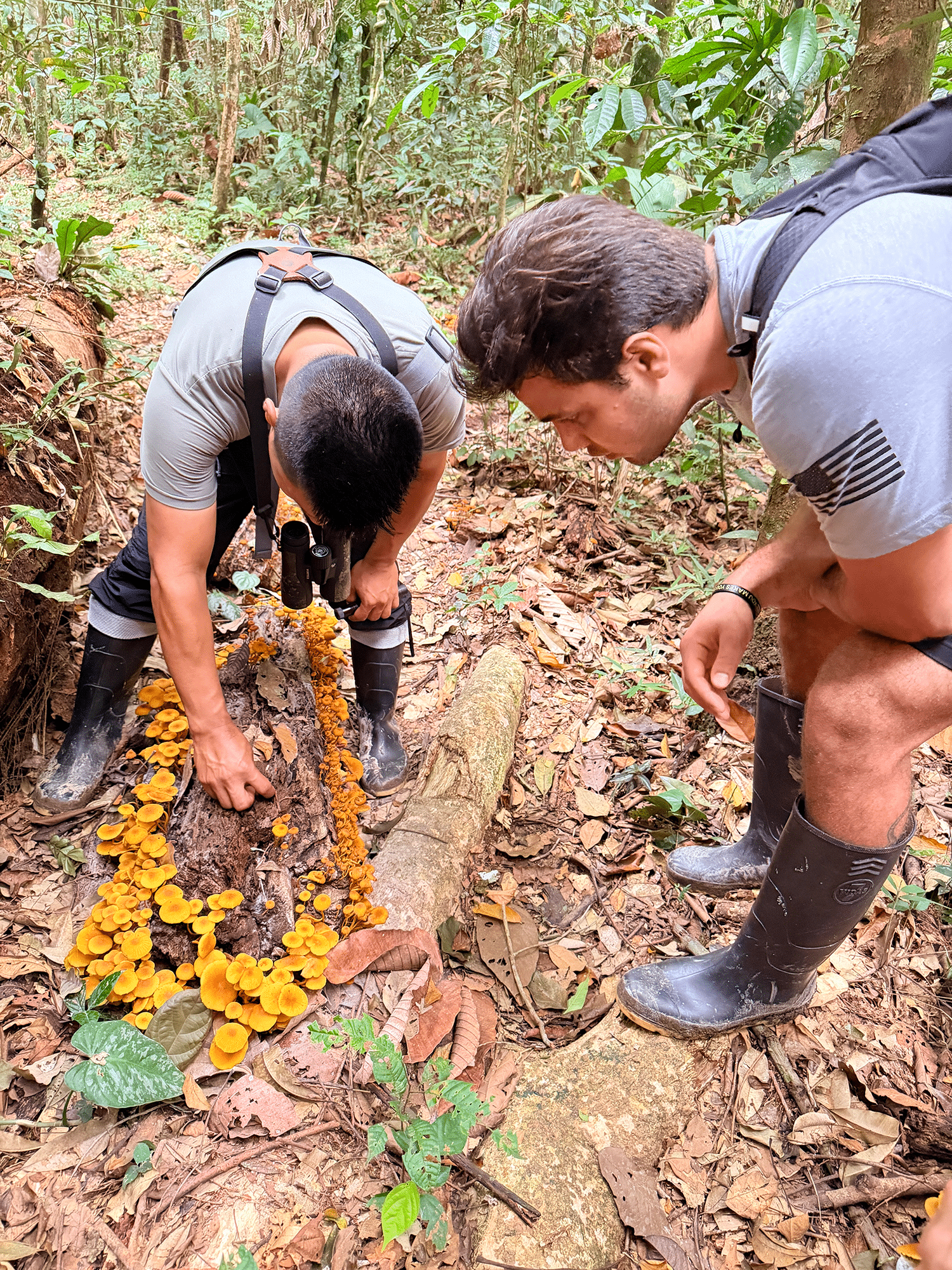
While the biodiversity is evident, the Amazon’s true mysteries remain invisible to the untrained eye. Our guide, Victor, possessed an uncanny ability to “see the unseen,” often stopping mid-trek to reveal the microscopic.
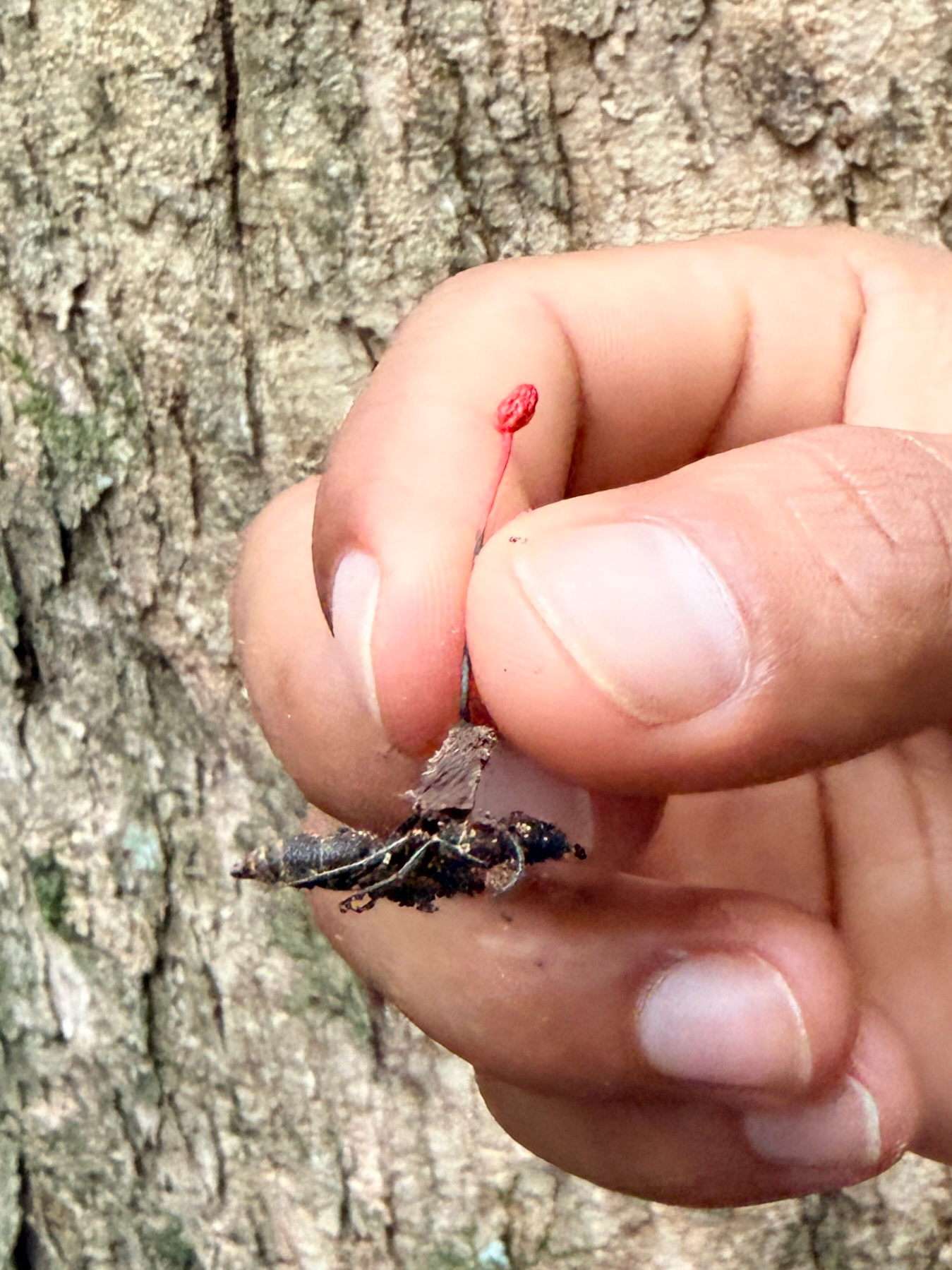
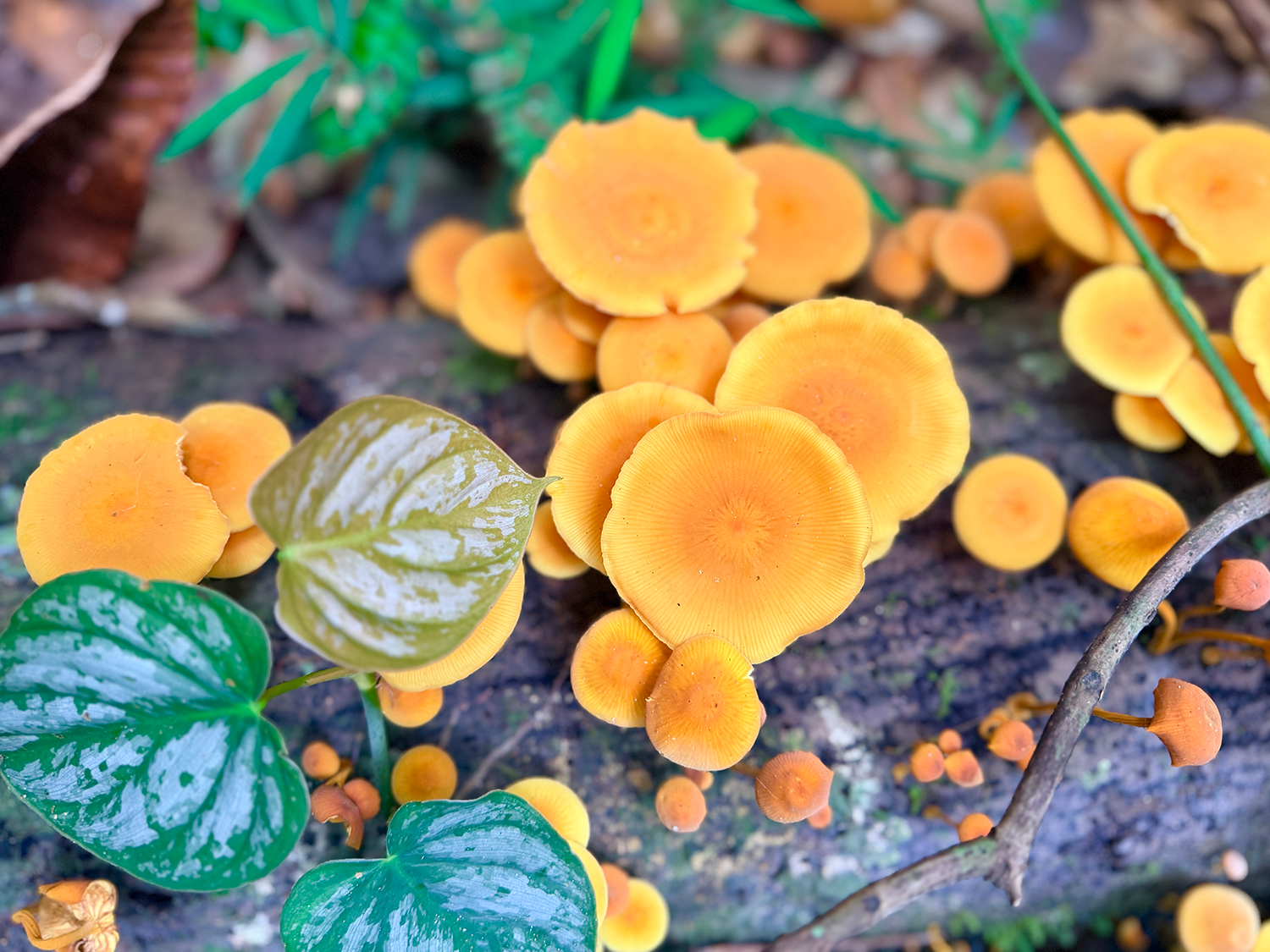
On one hike, he plucked a tiny zombie mushroom from a decaying stump—a parasitic fungus that hijacks an ant’s nervous system, steering the insect to a specific location before killing it. It was a stark, fascinating glimpse into the forest’s intricate symbiosis.
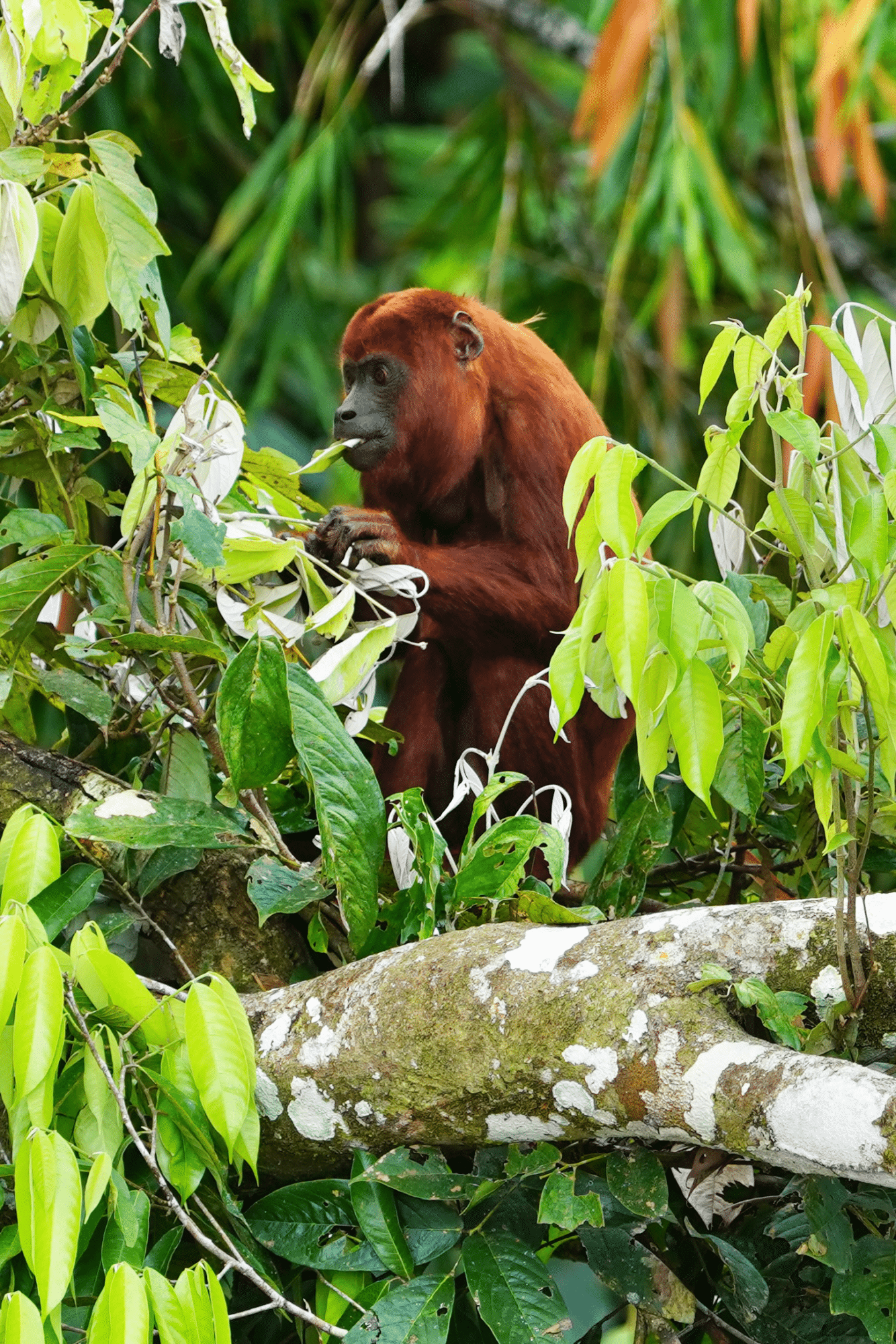
Victor’s expert vision translated seamlessly to the water. We trailed pink river dolphins whose skin flushed a deeper rose as they exerted themselves and watched red howler monkeys—mothers with infants clinging like shadows—strip riverside ficus trees.
The trip’s definitive find, however, came after dark. In the beam of his flashlight, Victor caught the glint of a 10-foot juvenile green anaconda coiled among the riverbank rocks. It was a sighting that felt less like luck and more like a masterclass in reading a landscape that, to us, was still opaque.
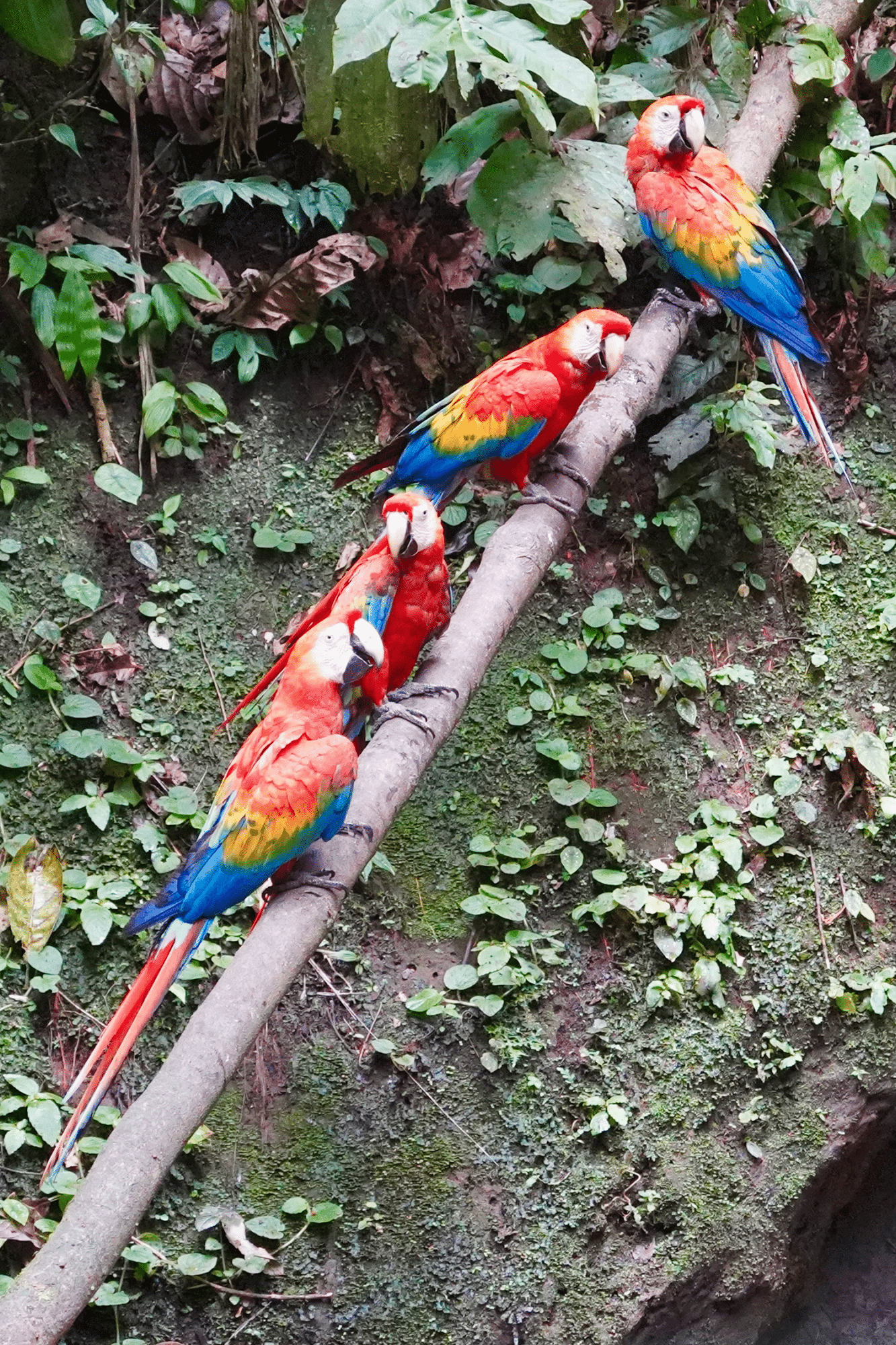
While much of the Amazon’s wildlife is cloaked, the bird life is a riotous public spectacle. Victor led us to two “licks”—biological detox centers where thousands of birds descend to ingest mineral-rich clay, a necessary ritual to neutralize the toxins found in their daily diet. The result was a dizzying kaleidoscope of color: cobalt-winged parakeets and orange-cheeked parrots, punctuated by the brilliance of scarlet macaws.
Living with the Forest
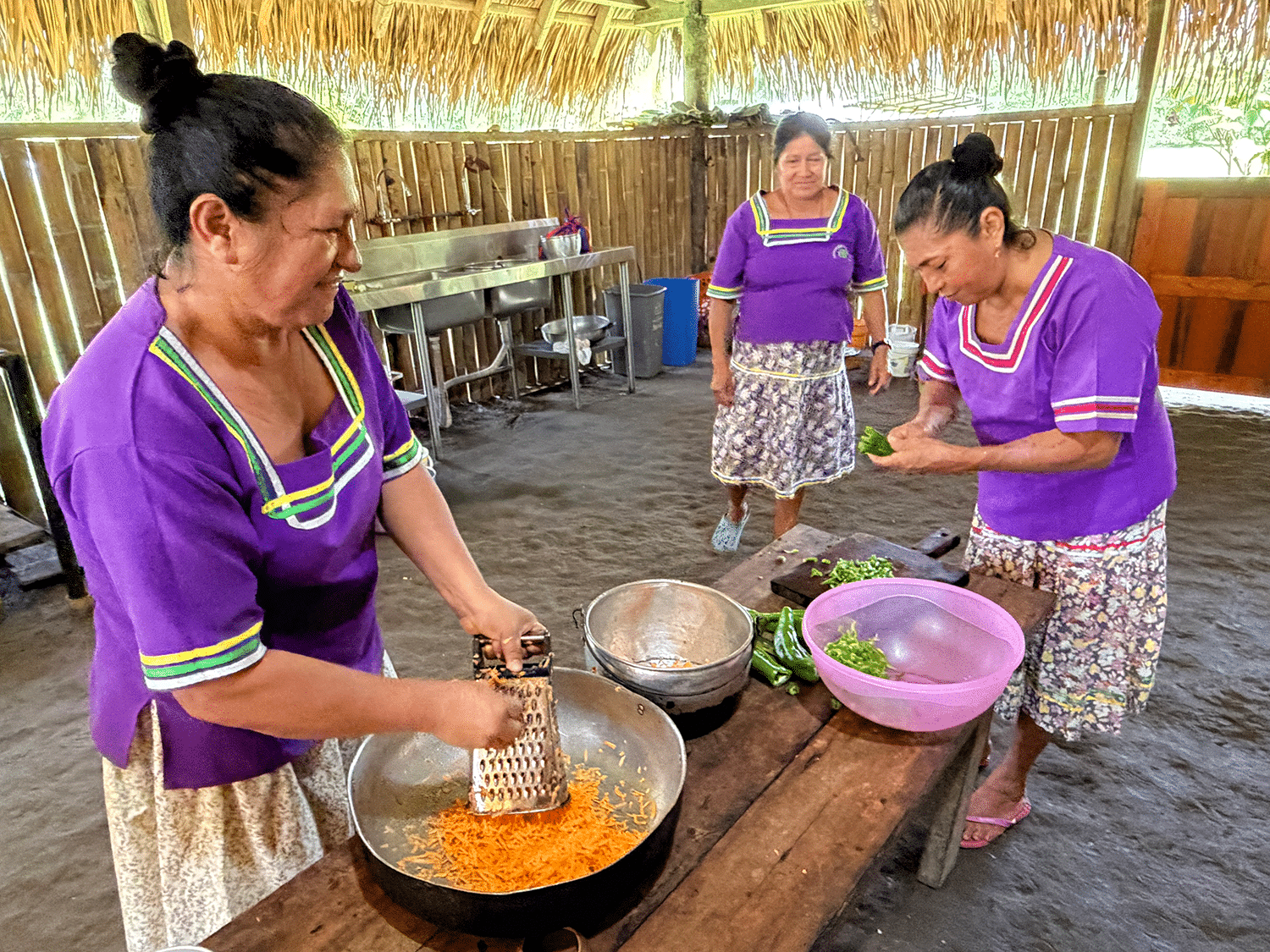
Beyond the wildlife, the Amazon is defined by the communities that have thrived here for generations. Victor took us to his village—a Kichwa community, where the forest is not just a backdrop but a partner.
The Kichwa way of life is anchored by sumak kawsay—the philosophy of living well in harmony with the forest. This is best demonstrated in the chakra, a form of vertical agroforestry that mimics the jungle’s natural layers.
Rather than clearing the land, the Kichwa cultivate “forest gardens” where canopy timber, mid-level cacao and ground-layer medicinal herbs thrive together. It’s a sustainable, organic “supermarket” that has supported the Kichwa for more than 2,500 years.
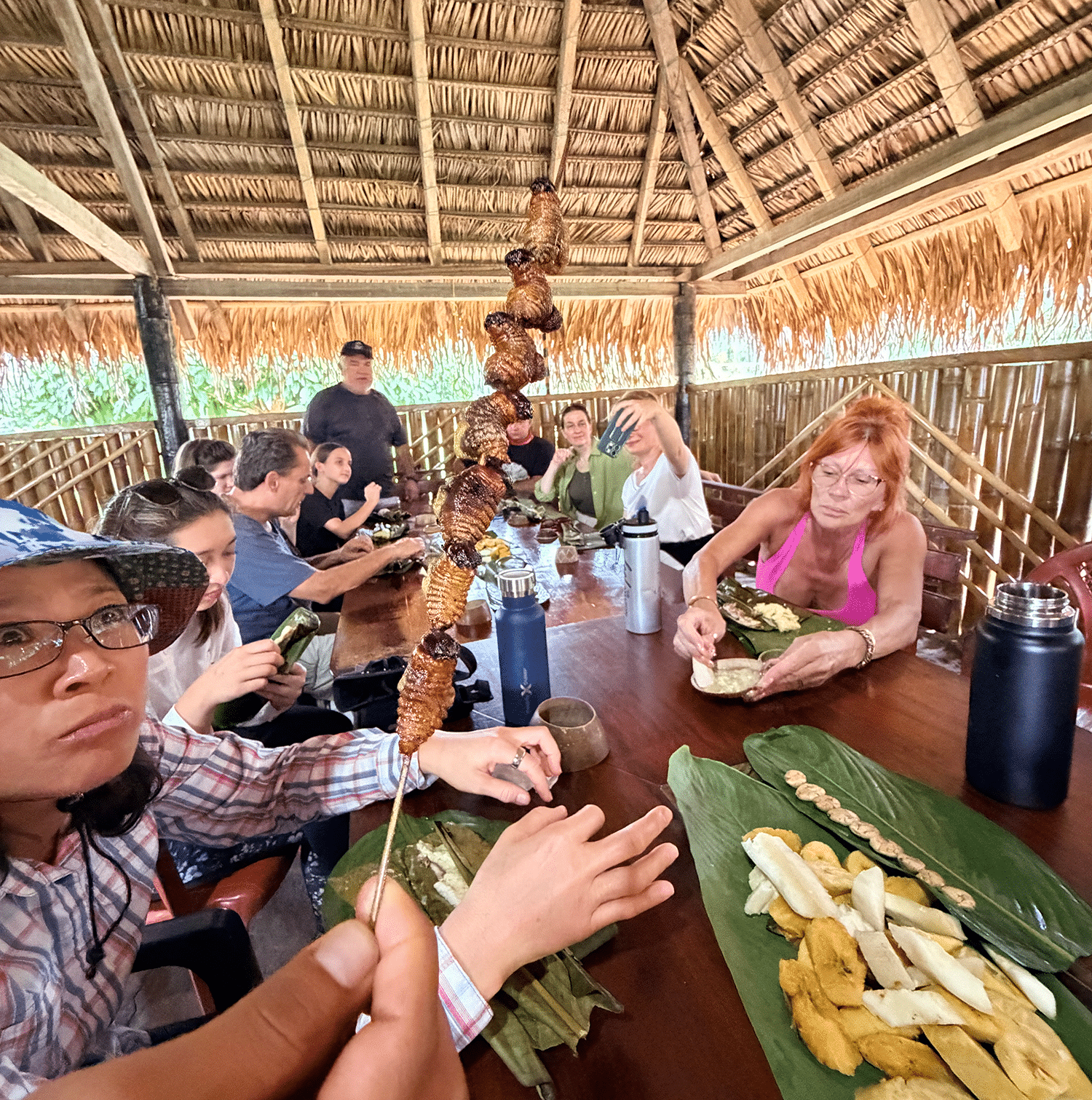
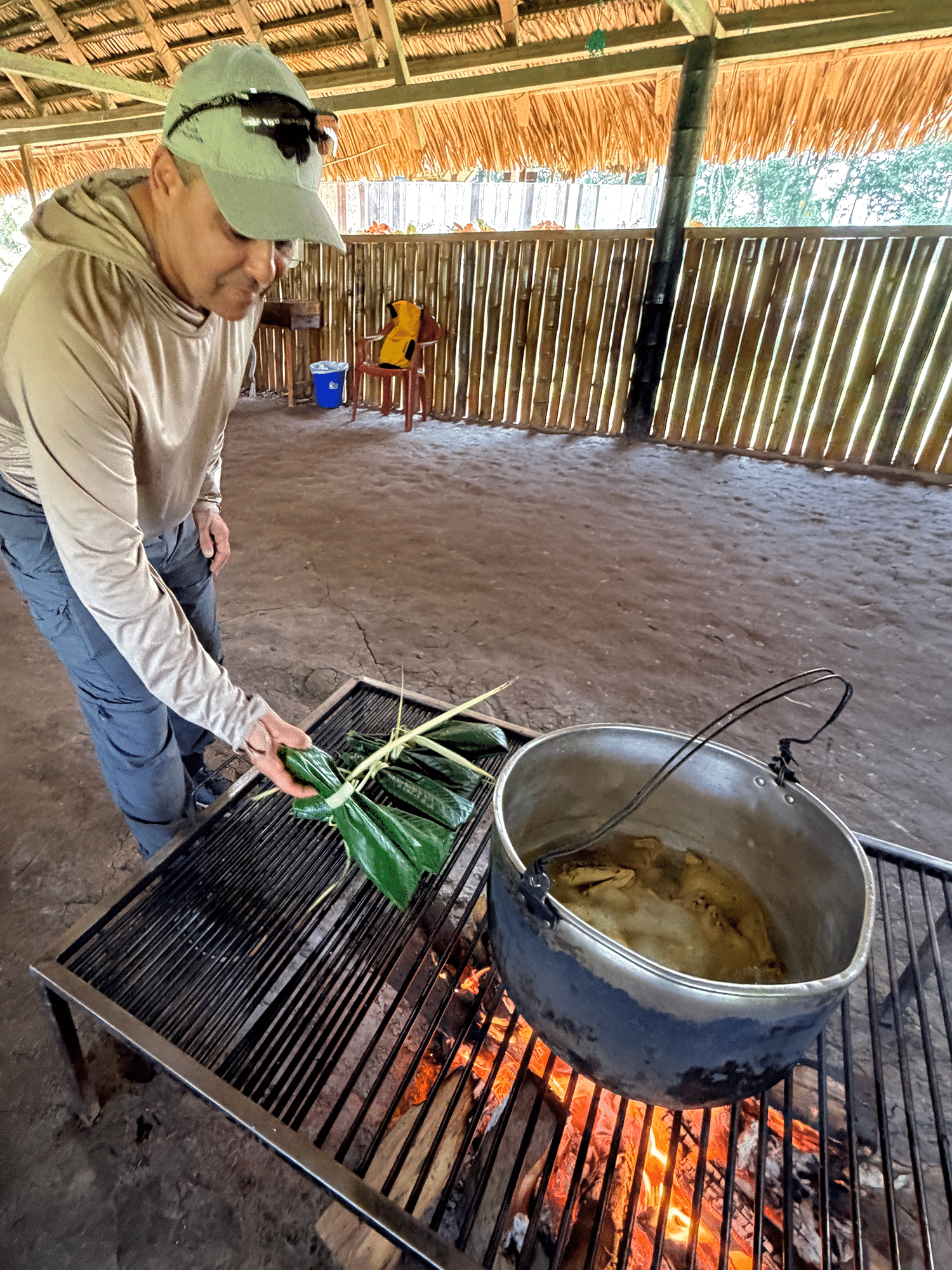
The women of the community graciously shared their food and traditions with us. We sipped wayusa, a caffeinated herbal tea families drink at dawn while discussing the night’s dreams, and helped prepare maito, seasoned tilapia wrapped in bijao leaves and grilled over an open flame, followed by a local staple: chontacuro grubs, which tasted remarkably like bacon.
A Manatee Farewell
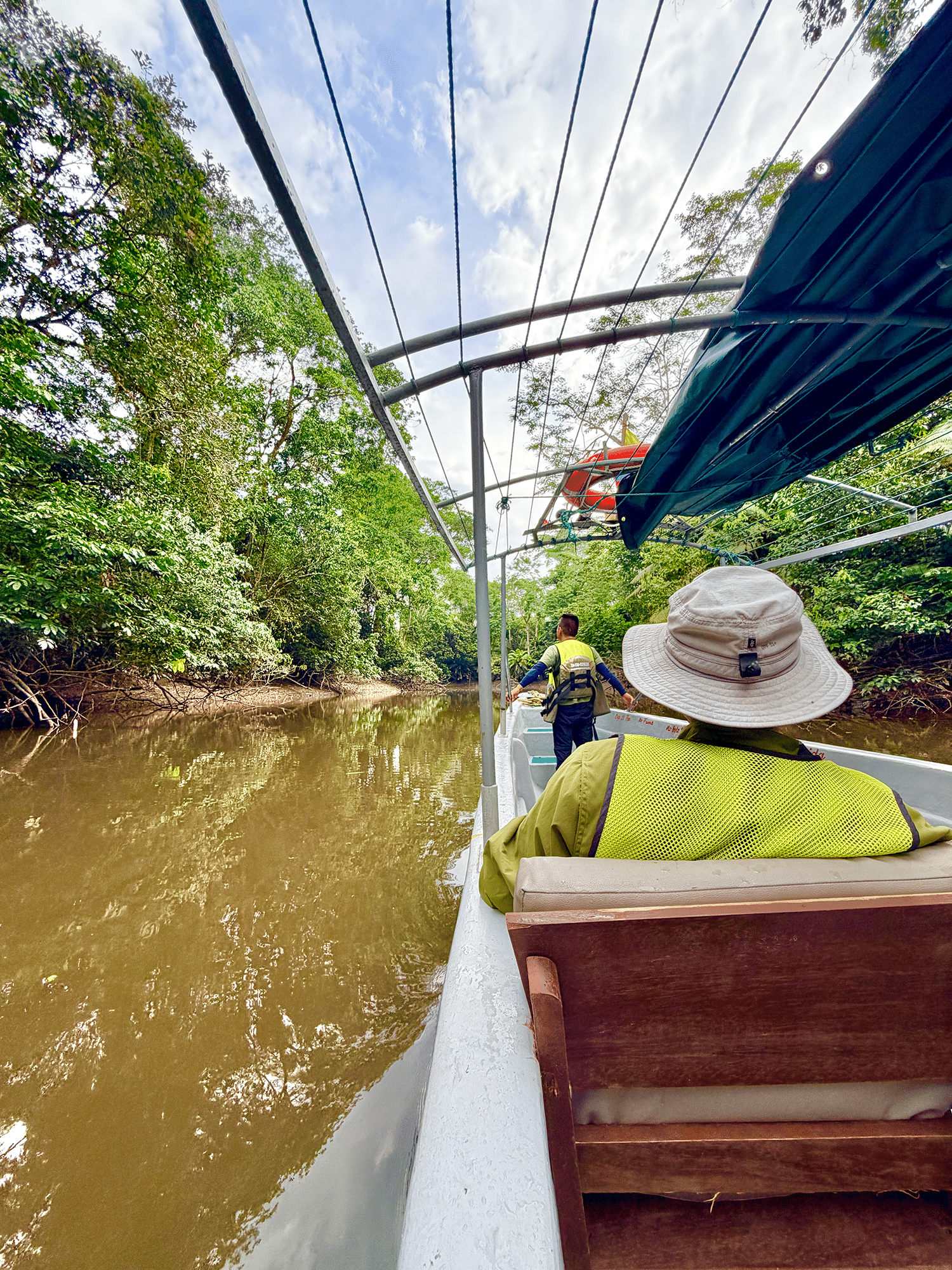
As we boarded the canoe for our journey back to Coca, I asked my son if he had missed his phone on the trip. He paused, then admitted he hadn’t needed it—he was never bored.
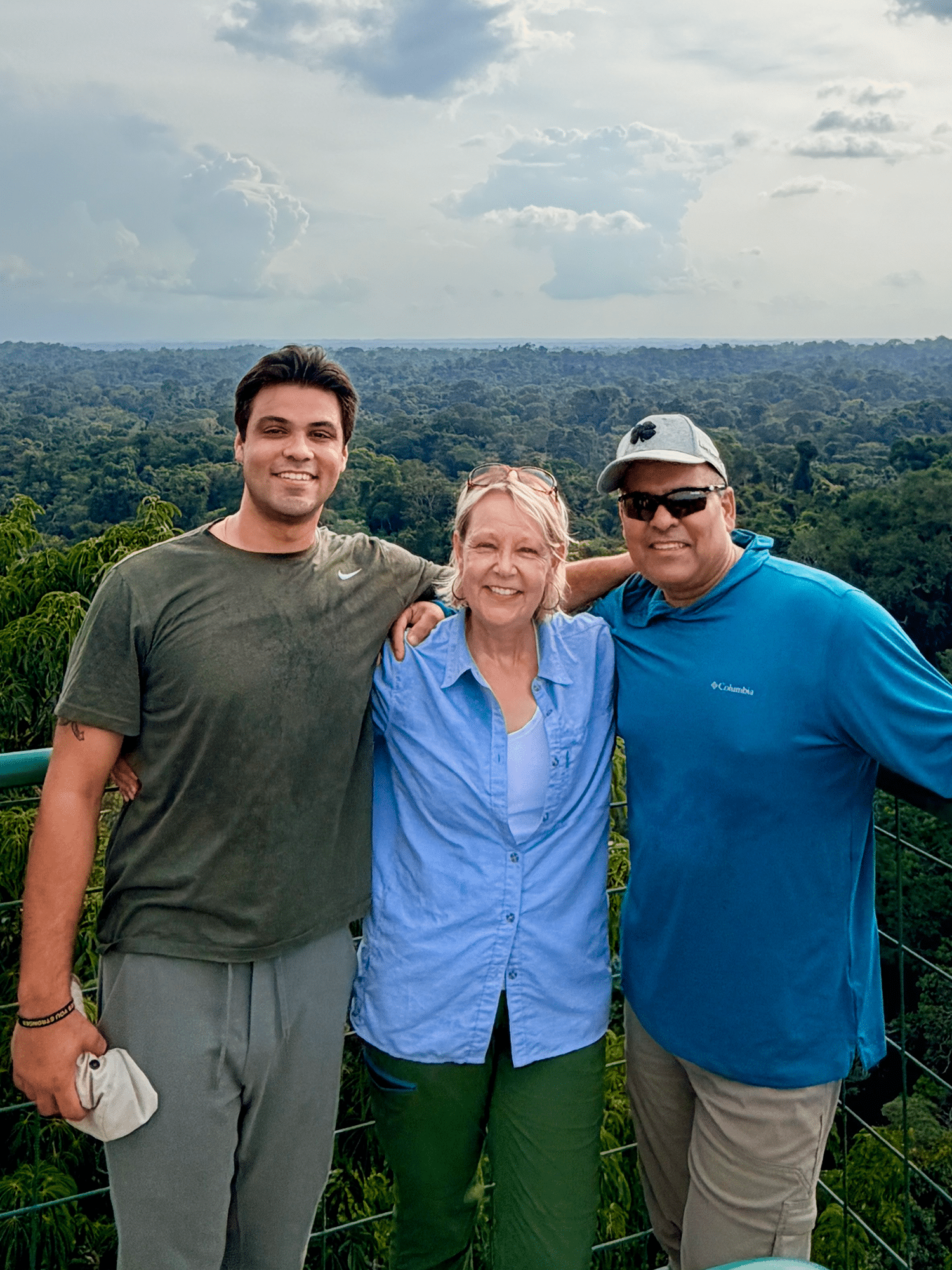
Our week had been engrossing—kayaking the blackwater Pañayacu River, climbing a 12-story observation tower above the canopy and night-hiking for purple pinktoe tarantulas—but not exhausting.
The Manatee and her crew made the otherwise impenetrable Amazon accessible, intriguing and comfortable—an epic backdrop for a milestone celebration.
Bring the Amazon Mindset Home
The most profound souvenir from the Amazon isn’t a handicraft or a photograph; it’s a shift in perspective on conservation. The “interconnectedness” of our planet stops being a buzzword and becomes a reality.
Here are some simple ways to do your part to protect the Amazon:
- Support Agroforestry: Look for chakra-certified or bird-friendly cacao and coffee. These products support Indigenous farmers who maintain the forest’s vertical layers rather than clearing them for monoculture.
- “One-In, One-Out” Rule: The Kichwa only take what they need from the forest. Bring this mindset to your own pantry by committing to a “use what you have” week once a month to reduce food waste.
- Carbon-Conscious Travel: If you visit the Amazon, choose operators like Anakonda Amazon Cruises that prioritize small-ship, low-impact tourism and employ local guides who have a vested interest in conserving the land.
How to Plan a Trip to the Ecuadorian Amazon
Best Stay:Opt for the Manatee for an intimate, high-end experience that mirrors its ultra-luxury and more expensive sister ship, the Anakonda. Skip the splurge on a deluxe suite; the standard cabin is sufficiently comfortable.
Suitability: While the ship offers a 50% discount for children (ages 6-12, shared cabin), the patience required for wildlife spotting and long canoe navigations makes this cruise better suited for older teens.
Must-Try: A maito-style grilled tilapia or a bacon-flavored chontacuro grub for the truly adventurous.
Packing: Vanity has no place in the jungle. The humidity is nearly 100%, so abandon the makeup and hair tools. Pack lightweight, long-sleeved shirts and pants for sun and insect protection. Laundry service is available for a fee. The ship provides rubber boots and ponchos.
Tech: This is a digital detox, but if you must check in, pay extra for the ship’s reliable Starlink satellite internet.
Perfect Pairing: Many travelers book the three-night Amazon itinerary as a pre-extension to a Galápagos cruise for the ultimate Ecuadorian nature immersion. For a standalone trip, opt for the seven-night cruise.
Shellie Bailey-Shah is a veteran journalist from Portland, Oregon, currently based in Europe. An avid world traveler, she has reached all seven continents and visited every one of the 63 U.S. national parks.
This writer received a complimentary cruise for the purpose of this article. All opinions expressed are solely her own.