I crave empanadas on a daily basis, and I’m not exaggerating. After years of making them at home, I can tell you that the dough is what separates a good empanada from a great one.
Store-bought discs are perfectly fine in a pinch. But if you have 30 minutes, homemade dough gives you something noticeably flakier, more flavorful, and far more satisfying to bite into.
My obsession with empanadas started at a Puerto Rican restaurant in Seattle that used to do the most incredible happy hour, including empanadillas (what they are called in Puerto Rico) filled with mojo pork, vegetarian beans and corn, and cheese and potato.
I was there every chance I got, especially when my boys were little, and mama needed a mojito at the end of a long day with two kids under 5 running around while I tried to work. While I couldn’t have my Puerto Rican neighbors, who I grew up with in Philly, cook for my family, I could at least give my kids the flavors I loved as a kid.
When the restaurant closed after a fire, my family was devastated. So, I learned to make them at home, and my family continues to celebrate in my awesome. Yes, even when I make them help fold the empanadas, which can be labor-intensive.
My kids grab them before soccer games. My husband reheats them from the freezer at 10pm. I make a double batch (sometimes triple batch) specifically so there’s always something ready. These little pastry pockets have become a non-negotiable in our house, and best of all, the empanada dough freezes and refrigerates well for later use.
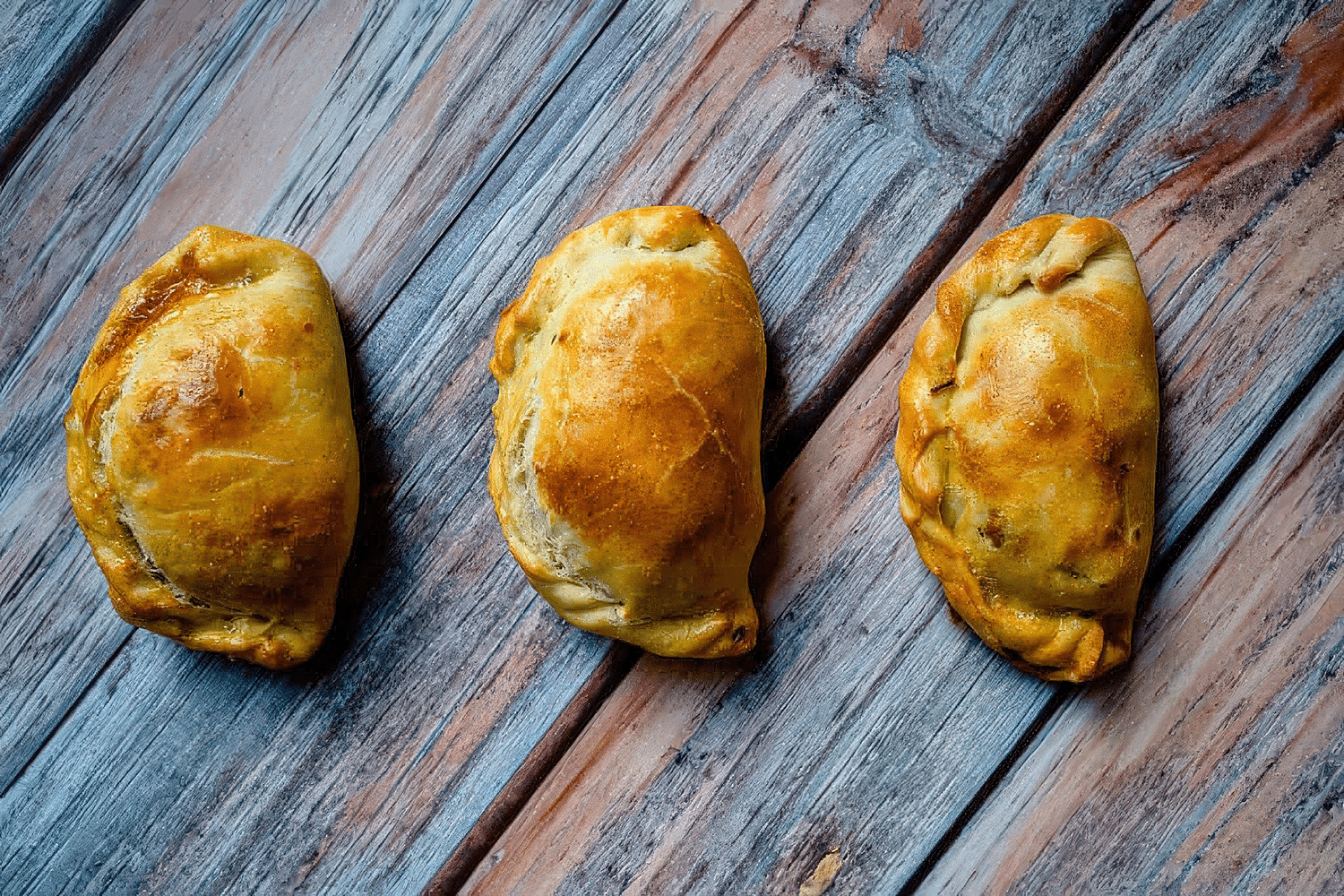
A Little Empanada History
The word empanada comes from the Spanish empanar, meaning “to wrap or coat in bread.” The dish traces back to Galicia, in northwest Spain, and arrived in Latin America with Spanish colonizers in the 16th century. From there, each country made it its own.
Argentina is probably the most celebrated for empanadas today, with every province having its own version and entire restaurants dedicated to them. But you’ll find them across Chile, Colombia, Ecuador, Peru, Bolivia, and throughout the Caribbean, including Puerto Rico. In Venezuela and Colombia, the dough is made from corn flour. In parts of the Caribbean, mashed yuca or plantains replace wheat entirely.
April 8th is National Empanada Day, but you never need an excuse to make a batch.
Once you nail this dough, the fillings are really only limited by what’s in your fridge, and what your picky eater will actually enjoy (yes, I have made “pizza” empanadas. I’m not proud of it, but I have to feed my youngest!).
Why I Bake Instead of Fry
Baked empanadas still develop a beautiful golden crust, and you skip the mess and the oil burns (been there, done that). It also means the kids can help from start to finish, which makes the whole process more fun. At least that’s what I tell my boys. Ha!
Baking also makes them much more freezer-friendly, which is really the point of making a large batch. And I’m going to claim they are healthier, because fried food always adds cholesterol, etc.
What to Know Before You Start
This dough behaves similarly to pie crust, which means cold butter is imperative. Warm butter gives you something dense and greasy rather than flaky.
A few things that actually make a difference:
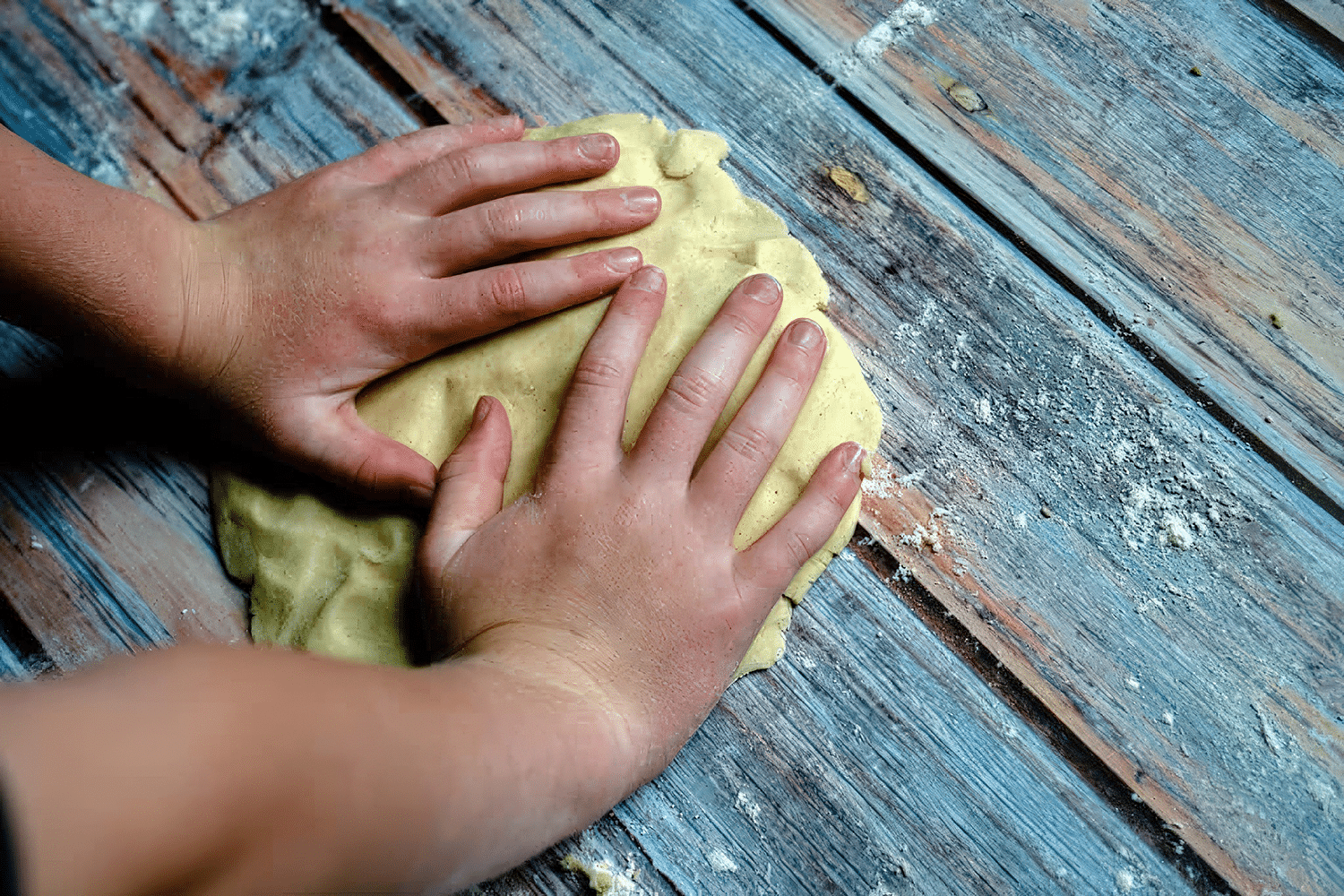
Work quickly. Once you add the wet ingredients, don’t overwork the dough. Knead exactly four times — four folds and then stop.
Chill the dough. 30 minutes in the fridge makes it easier to roll and produces a flakier result. You can skip this step if you’re short on time, but the dough will be stickier and harder to work with.
Make it by hand. A food processor works, but working the butter into the flour with your fingers gives you better control over the texture. The small lumps you see are normal and actually create that flaky crust.
Double it. Empanadas take time to assemble, so if you’re going through the effort, it’s worth stocking your freezer. I almost always double, and sometimes quadruple, this recipe.
If you ever quadruple it, split everything into two large bowls. 18 cups of flour and 8 sticks of butter is simply too much to work with at once.
Gluten-free note: This recipe does not work with a GF 1-to-1 flour substitute. Still working on finding a solid alternative that holds together properly.

Filling Ideas
The dough is really just the starting point. Here’s what gets made most often in our house:
Pizza empanadas are a staple for picky eaters. Mix shredded mozzarella with a little pasta sauce as your filling and serve with marinara for dipping. Not traditional, but it works if you have a beige eater who just won’t go outside the norm.
Freezing and Reheating
Once baked and fully cooled, these freeze beautifully. Freeze in a single layer on a baking sheet first, then transfer to a zip-lock bag. Reheat in a 350°F oven for 10-12 minutes. The microwave works for a quick snack, though the crust won’t be as crisp.
You can freeze them raw, but it will take longer to warm up and you will have to do the egg wash later too, which is just too complicated when the baked and frozen ones are just as good.
Tools Worth Having
- Tortilla press — eliminates most of the rolling; worth it if you make empanadas regularly
- Parchment rounds — keeps discs from sticking together
- Rolling pin — if you prefer to roll by hand
- Pastry rush — for the egg wash
How to Make Empanada Dough
Ingredients
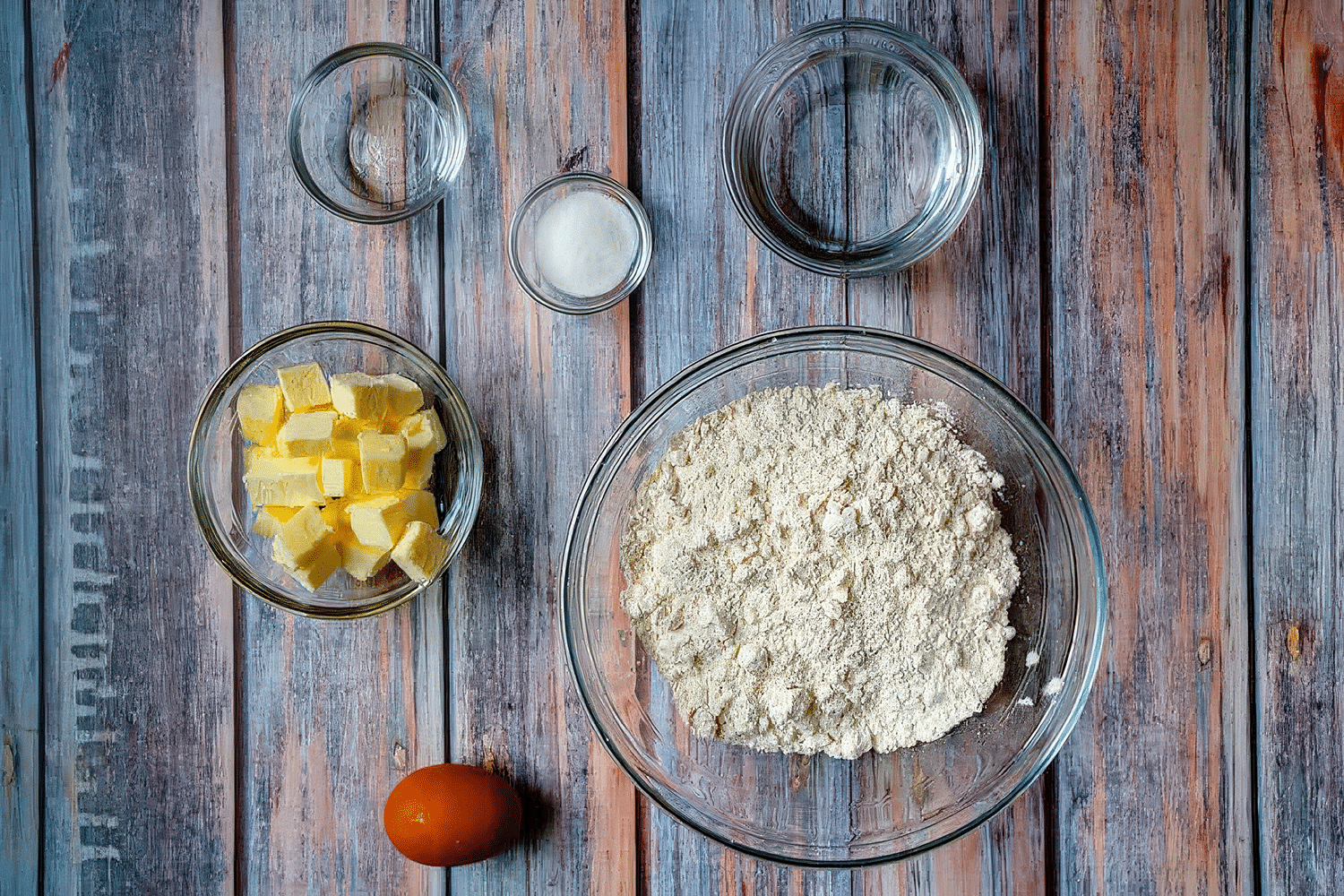
- 4½ cups flour
- 3 tsp salt
- 1 cup butter (2 sticks, chilled)
- ⅔ cup cold water
- 2 tbsp white vinegar
- 2 large eggs
Egg wash: 1 egg + 1 egg yolk + 1 tbsp water, whisked together
Instructions
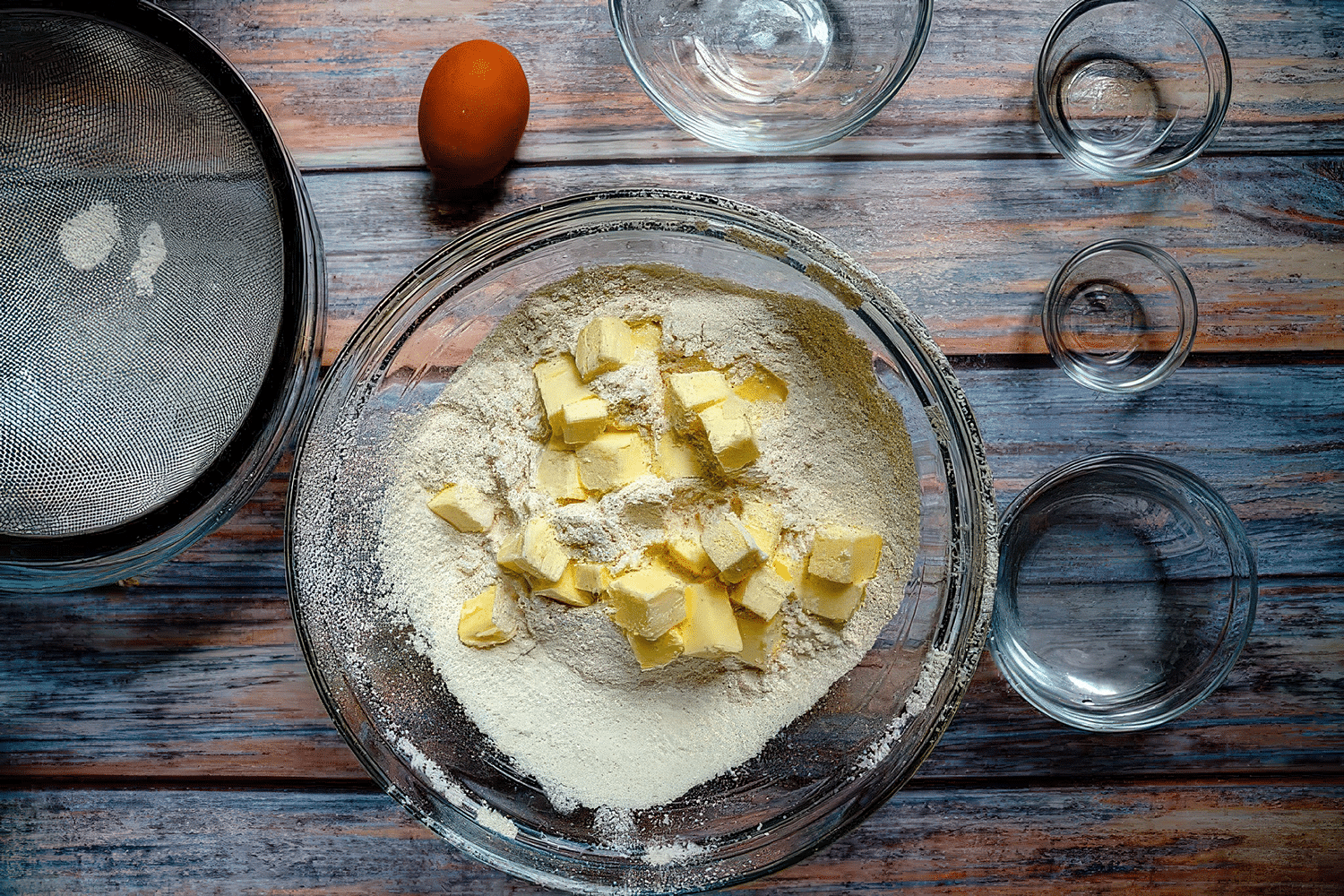
- Sift flour and salt into a large bowl.
- Cut chilled butter into cubes and add to the flour.
- Work the butter into the flour with your fingers until the mixture resembles coarse crumbs. Small lumps are expected and fine.
- In a separate small bowl, whisk together the eggs, white vinegar, and cold water.
- Add the wet ingredients to the flour-butter mixture and combine with your fingers or a fork until the dough just comes together.
- Knead four times: push with your palms, fold in half. Stop there.
- Divide the dough into two balls and wrap each tightly in plastic wrap.
- Refrigerate for at least 30 minutes.
- Pinch off 2-3 tbsp portions and roll each into a ball.
- On a lightly floured surface, roll each ball flat with a rolling pin. A tortilla press speeds up this step considerably — just place parchment rounds between each disc so they don’t stick together.
- Place about 1 tbsp of filling in the center of each disc. Start conservatively until you get comfortable sealing them — overfilling is the most common reason empanadas burst in the oven.
- Fold the dough over to form a half-moon and press the edges together firmly.
- Seal with a fork, or use the traditional tbraid technique.
- Tip: A small amount of egg white on your fingertip acts as glue along the edge — just work quickly so the dough doesn’t get soggy.
- Transfer to a parchment-lined baking sheet.
- Brush the tops with egg wash using a pastry brush.
- Bake at 375-400°F for 20-25 minutes, until golden brown. Start checking at 20 minutes since oven temperatures vary.
Baked Empanada Dough
Equipment
- Colavita Aged White Wine Vinegar
- King Arthur Flour, 100% Organic All-Purpose Flour Unbleached
- King Arthur Flour, 100% Organic Whole Wheat Flour
- Diamond Crystal Table Iodized Salt
- Baking Trays Half Sheet (2 Pack)
- Colavita Extra Virgin Olive Oil
- Farberware Classic Wood Rolling Pin
- Parchment Paper Baking Circles
- 8 Inch Cast Iron Tortilla Press
Ingredients
- 4 ½ cup flour
- 3 tsp salt
- 1 cup of butter 2 sticks- chilled
- 2/3 cup of water
- 2 tbsp white vinegar
- 2 large eggs
Instructions
- Sift flour and salt into a large bowl.
- Cut chilled butter into cubes. Add to flour.
- Crumble together flour mix and butter until well combined (little lumps are normal).
- Whisk together egg, vinegar and water in a separate small bowl.
- Add wet ingredients to butter flour mixture, using your fingers or a fork to combine.
- Knead the dough (push with your palms and then fold in half) four times.
- Break dough into two balls and wrap each in plastic wrap
- Refrigerate dough for at least 30 minutes to chill (will be easier to roll out, but if you are in a rush, you can use dough right away).
- Separate chilled dough into 2-3 tbsp balls.
- Roll each small dough ball with a rolling pin on a flour dusted surface. Alternately, you can use a tortilla press, like this one that we use, which will speed up the process a ton. You will want to place parchment paper rounds between each empanada shell to keep the dough separated once flattened.
- Fill empanada shells by placing about 1 tbsp of filling into the center of your baked empanada dough (as you get better at making empanadas, you can really stuff them, but to start, go small so your empanadas don’t burst open).
- Fold dough in half over the empanada filling, creating a semi-circle.
- Pinch the edges to seal and then use a fork to crimp the empanada shut or you can try the empanada curl/ braid sealing technique known as repulgue. TIP: You can put a little egg white on your finger to act as glue when you seal the empanada edge, but you must do this quickly so your empanada dough doesn’t get soggy.
- Transfer your empanada to the parchment lined baking sheet.
- Brush the tops of your baked empanadas with your egg wash.
- Bake at 375-400 degrees (depending on your oven) for 20-25 minutes, until the tops are golden brown.
Egg Wash InstructionsWhisk together1 egg plus 1 egg yolk with 1 tablespoon of water. Using a pastry brush, brush the tops of your raw empanadas after folding the dough over filling, crimping shut and placing on a baking sheet, but BEFORE you put the empanadas in the oven to bake.
Notes
- Mojo Pork Empanadas
- Slow Cooker Carnitas Pork
- Chicken Empanadas
- Cheese Empanadas (Veggie empanada with potato)
- Vegetarian Empanadas (Veggie empanada with black beans)